

Training Journal – Lessons from Recent Courses
After my last update on my diving pathway, I thought I had a fairly good idea of what the next steps would look like. The plan seemed simple enough: complete my Divemaster, start assisting on courses, and begin the long road toward becoming an instructor.
Reality, as it often does, had other ideas.
Over the past two years, my diving journey has had a few ups and downs – but a lot of learning and great experiences, each of which has shaped how I approach diving today, and how I will teach it in the future.
This isn’t a story about ticking off certifications. It’s about what each stage of training taught me about patience, standards, mindset, and how to stay curious no matter how many dives are in the logbook.
The Divemaster Experience — A Lesson in Patience
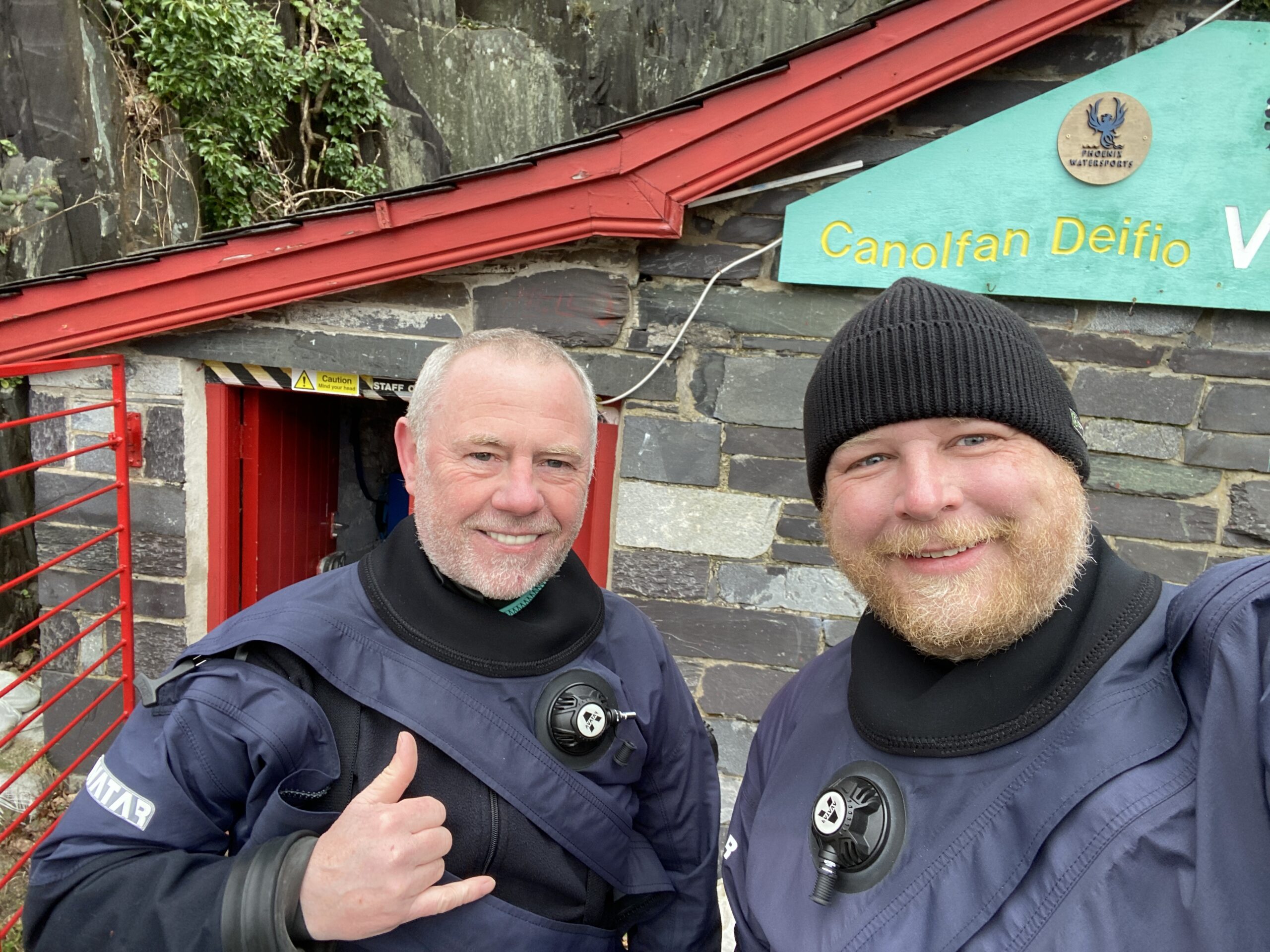
My Divemaster course didn’t exactly go to plan.
The course ended up being a far more fragmented experience than I had anticipated. Sessions were often rescheduled, there wasn’t a clear outline of what outcomes were expected, and I frequently found myself wondering where exactly I stood in the process. Some of the scheduling issues were probably also compounded by my other commitments, but it was not as straightforward as I’d expected.
Before long, the group I’d started with had all dropped out. By the end, it was just me left — trying to piece together a course that seemed to have no roadmap.
It took longer than planned to get everything finished – we had seven in-water sessions, two classroom sessions and the snorkel instructor bits in the pool to start out with. At the end, it stretched over months. I finally wrapped it up in mid-October, long after I’d expected to be qualified.
The lack of structure was frustrating, but in hindsight, it taught me one of the most valuable lessons of professional diving: you’re often responsible for your own structure and progress. A good instructor or centre can guide you, but the motivation to finish, ask questions, and hold yourself to a standard has to come from you.
Technical Diving: Curiosity Meets Humility
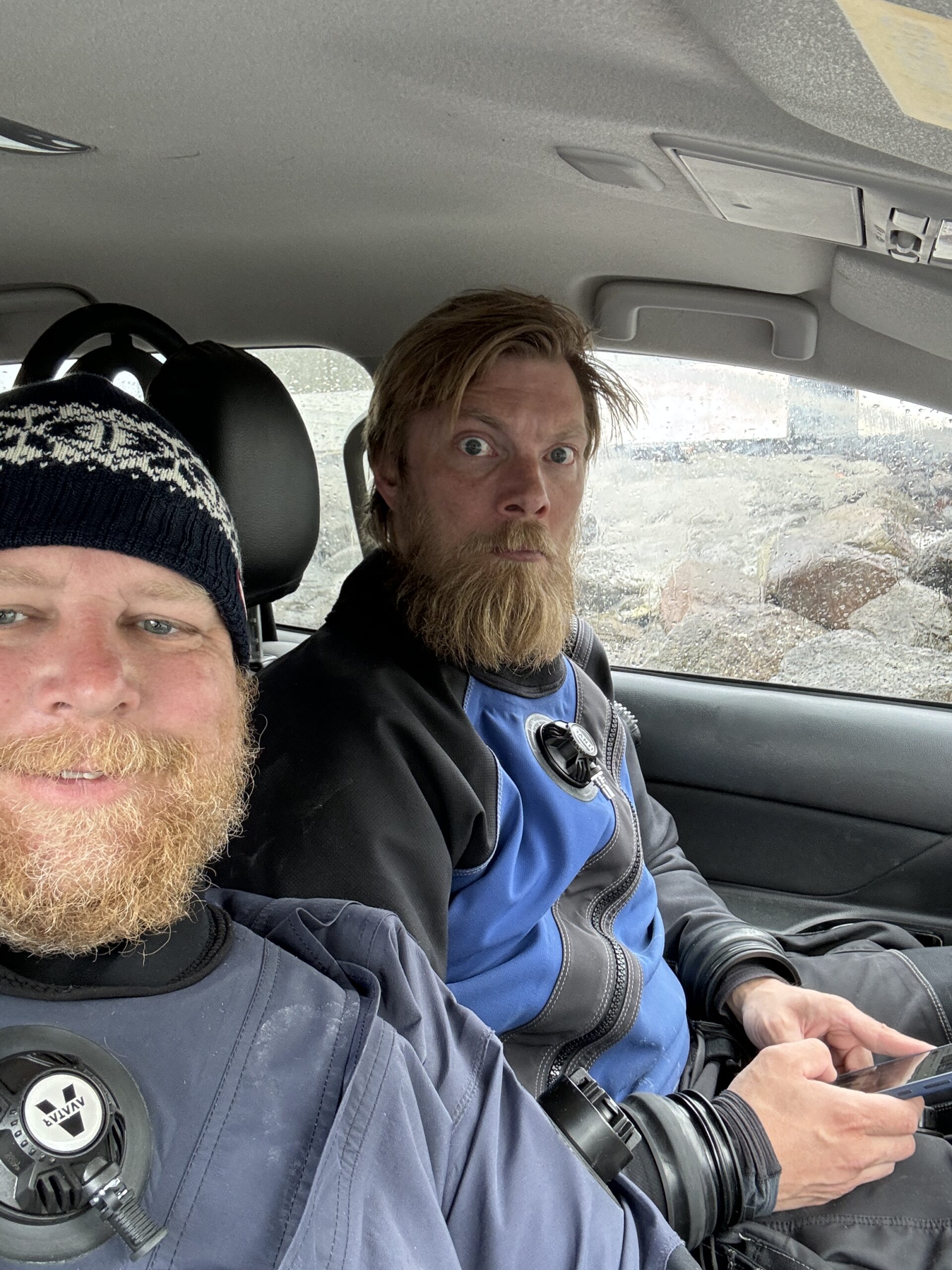
Around the same time, I began exploring the world of technical diving. My first attempt at the SSI Decompression course was, frankly, a bit of a false start. Dives were postponed several times, and while I completed the first one, the others never materialised. In the end, I completed the dives with Punkfish in December, and was eventually deregistered from the course by my original centre (they had no copy of a training record) – I’ve discussed this issue with Punkfish, and we will sort out the certification later this year.
At the end of May last year, I went back to the Faroe Islands to train with Bogi from North Atlantic Diving, doing a bespoke introduction to twinset diving over the course of a week. Cold water, strong currents, and steep learning curves — but the kind of challenge that sharpens you as a diver.
Here’s a video summary of my first time diving on the Faroe Islands in September 2023:
Later still, I took GUE Fundamentals in Vinkeveen (NL) with Frederik Bring and Dorota Czerny. That course was a turning point and one of the best courses I’ve taken so far. Even though I didn’t achieve a full pass (a provisional recreational pass due to not being able to reach my valves), it absolutely changed my diving. Every drill, every feedback session, and every debrief shifted how I think about awareness, control, and teamwork underwater.
That week gave me a new standard to aim for. A clear benchmark of what “good” really looks like underwater. It also taught me that “not passing” isn’t failure — it’s feedback. And that’s something diving, and life, both have in common.
Medicals, Limitations, and Rerouting the Plan
As I outlined in the post from last June, “But you’re not fat…”, I was too overweight to pass a UK HSE medical – which is a non-optional requirement to work as a dive professional in the UK (other countries have different rules, as I’ll explain below). Some of the plans I envisioned in that post didn’t quite come to fruition – life happened, and I dropped off the Second Nature program for a while; that, in turn led to frustration and disbelief in my ability to lose weight and change my lifestyle, etc. A typical vicious circle.
While that was a setback, I did manage to stick with some of the lifestyle changes: I was more mindful of nutrition and was becoming more active. I’ve recently restarted the Second Nature program – this time with medication support – and it’s working. I’m excited for the future and very excited about reaching my goals. My BMI and fitness levels are now both at a state where I could pass a HSE medical, however as I only have a few weeks left in the UK this year, I won’t be applying for the medical until January.
Life as a Fresh-Baked Divemaster — The Canary Islands Chapter
Sometime last year, I came across Punkfish Diving on Instagram. Punkfish is a German/English/Spanish-speaking centre on La Palma, the western-most island of the Canary Islands. Their logo is a bright yello, hand-drawn fish with a mohican haircut – of course I had to follow them. We got into a conversation, and they suggested I need a t-shirt with their logo. I don’t believe in wearing clothes with logos unless I have some connection – in this case, I would have to dive there to feel I’ve “earnt” the right to wear their merchandise (yes, I’m weird like that). But I asked if they would be interested in taking on a freshly-minted Dive Master for a few weeks over the Christmas period.
The conversation went back and forth a bit, but the outcome was they offered me the chance to come out and spend some time at the centre, learning the rops of the industry. Vero initially said that I wouldn’t be guiding clients, as they didn’t know me, and I wouldn’t know the area. They also wanted to see what my skills were really like. The deal was I would work for free: prepping and shlepping kit, helping customers, filling tanks, getting things washed down at the end of the day and ensure the guests have a good time. In return, I would be able to dive for free and profit from some mentoring, and if required, additional guidance and instruction on my professional path.
Recreational Medical
In order to be able to dive in Spain, I had to have a medical signed by a doctor. Here in the UK, that’s almost impossible to get – unless you go to a medical assessor who usually does HSE medicals. I booked an appointment for a recreational medical with Dr. Laurian Csurovski in Preston. He suggested I need to lose weight, but was otherwise happy with my fitness and general condition and gave me a clean bill of health.
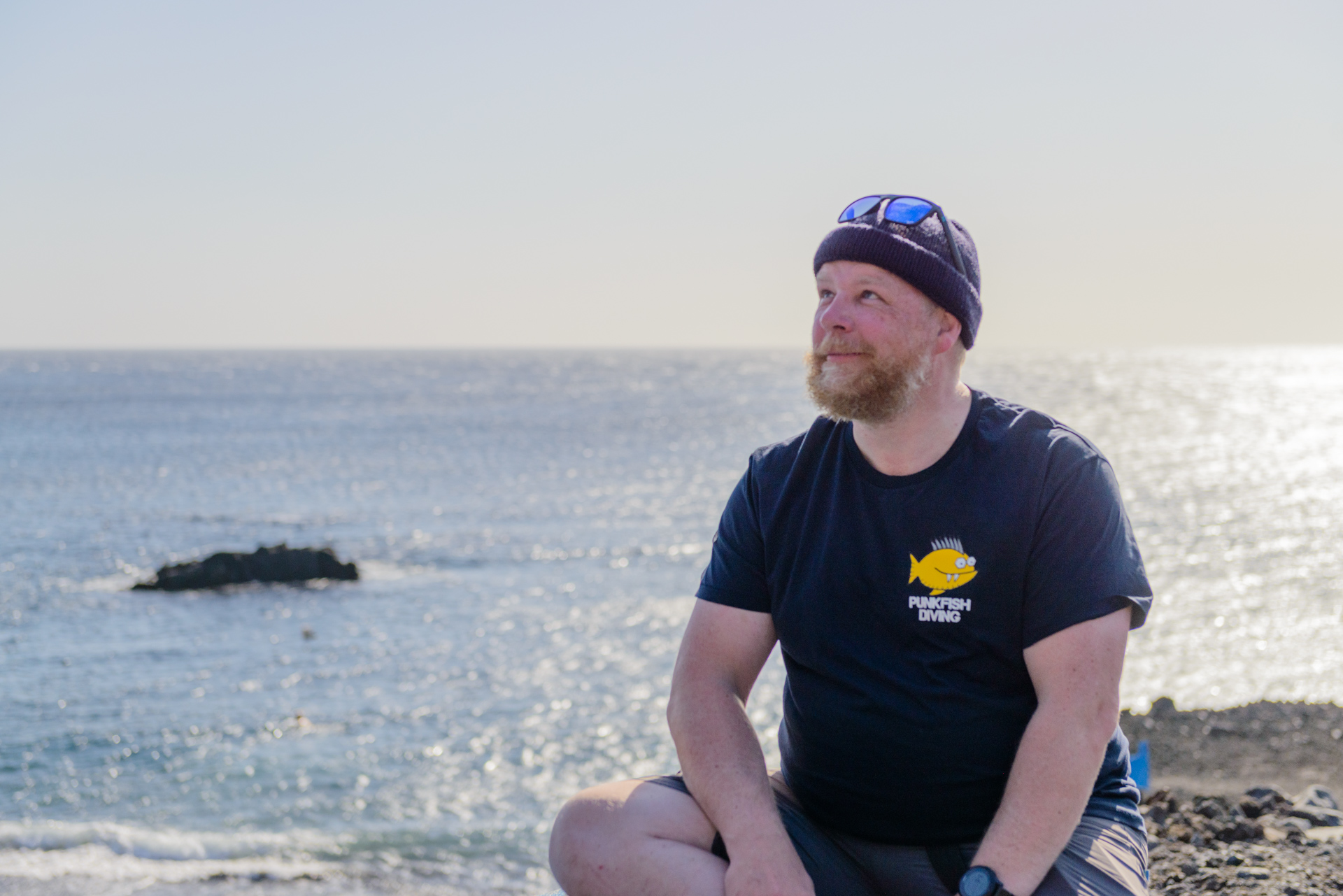
The four weeks on La Palma were amazing. It was everything I’d hoped for and more: warm water, great visibility, and a mix of divers from all walks of life. I got to see what day-to-day dive operations really look like: gear logistics, briefings, guiding, helping nervous students, and working as part of a small but tight-knit team. Occasionally we’d also finish up the days just sitting in the sun with a post-dive coffee beer, talking through what went well and what didn’t.
Suprisingly, on only my third day of diving with Punkfish, they scheduled me to guide three young Spanish guys (under Jens’ watchful eye), as they were confident I could do it without any issues. They were more confident than me, and it was a very stressful dive – these guys were harder to keep together than a herd of cats, but over the course of my time in Fuencaliente I ended up guiding 9 or 10 dives in total (about 1/3 of all my dives there).
This was where the theory met the practice — where I learned how to teach without teaching, how to watch divers and anticipate what they need before they know it themselves. Learning how to do a briefing in the Dive Master course doesn’t really prepare you for doing it in real-life – even if you’ve done it a few times on the course, it’s totally different stood one a beach with guests who just want to dive.
That internship taught me something no course could: diving is about people as much as it’s about the water. Every diver brings a different story, and part of the job is adapting to each one.
The Quiet Time
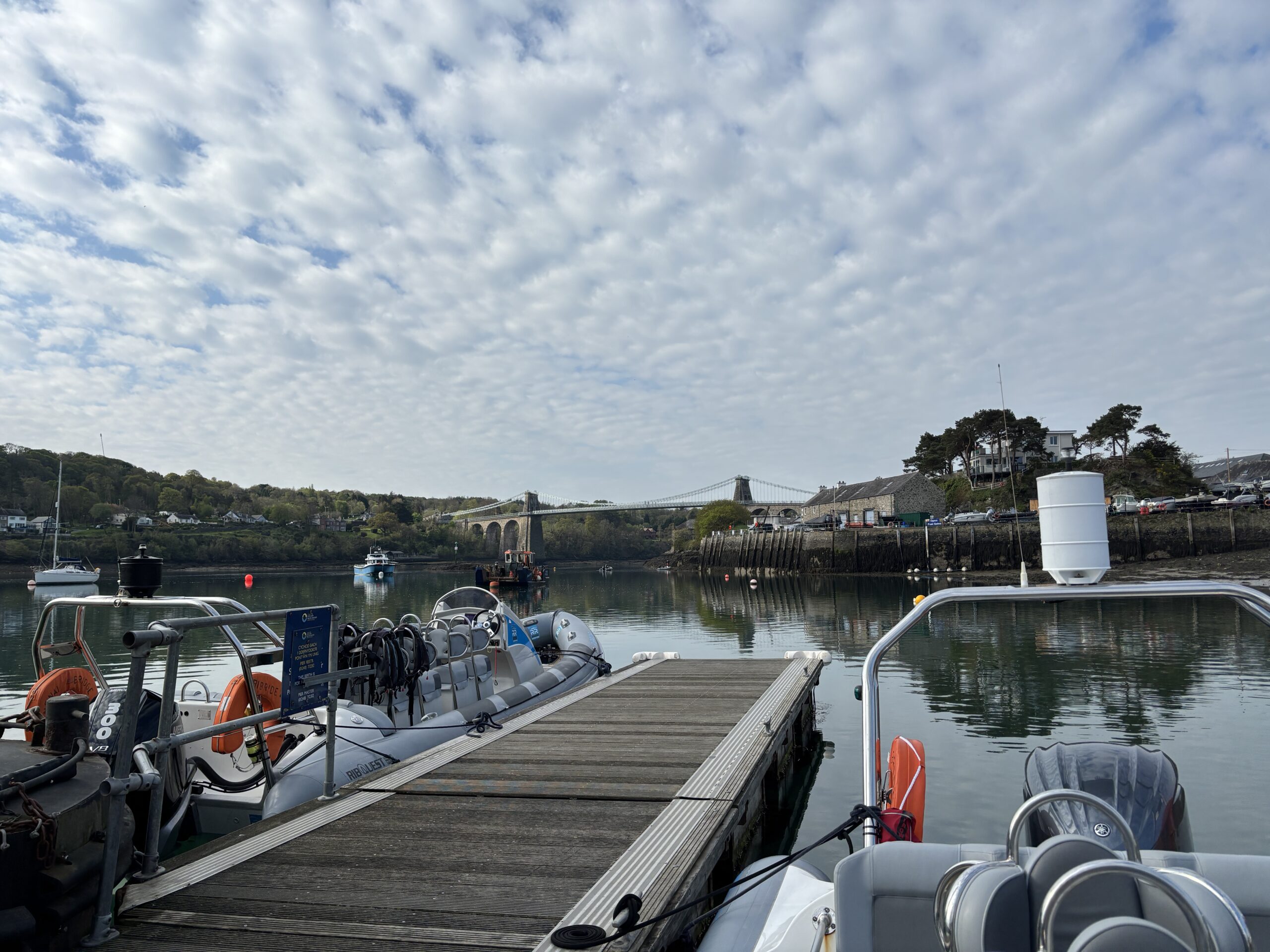
The first half of 2025 was slow for diving. Between work commitments and time spent on boating projects, I only logged about a dozen dives up to the end of July. While this period was extremely stressful, the time was not entirely wasted — it meant I had a lot of accrued time off in the summer months (which were glorious this year), giving me a good chance to catch my breath and start planning what will come next.
When I finally got back in the water properly in August, I felt that familiar sense of reset: the first descent after a long surface interval, when the world quiets down and the mind clicks back into that comfortable rhythm of breath, buoyancy, and awareness.
The Assistant Instructor Course — Learning to Teach
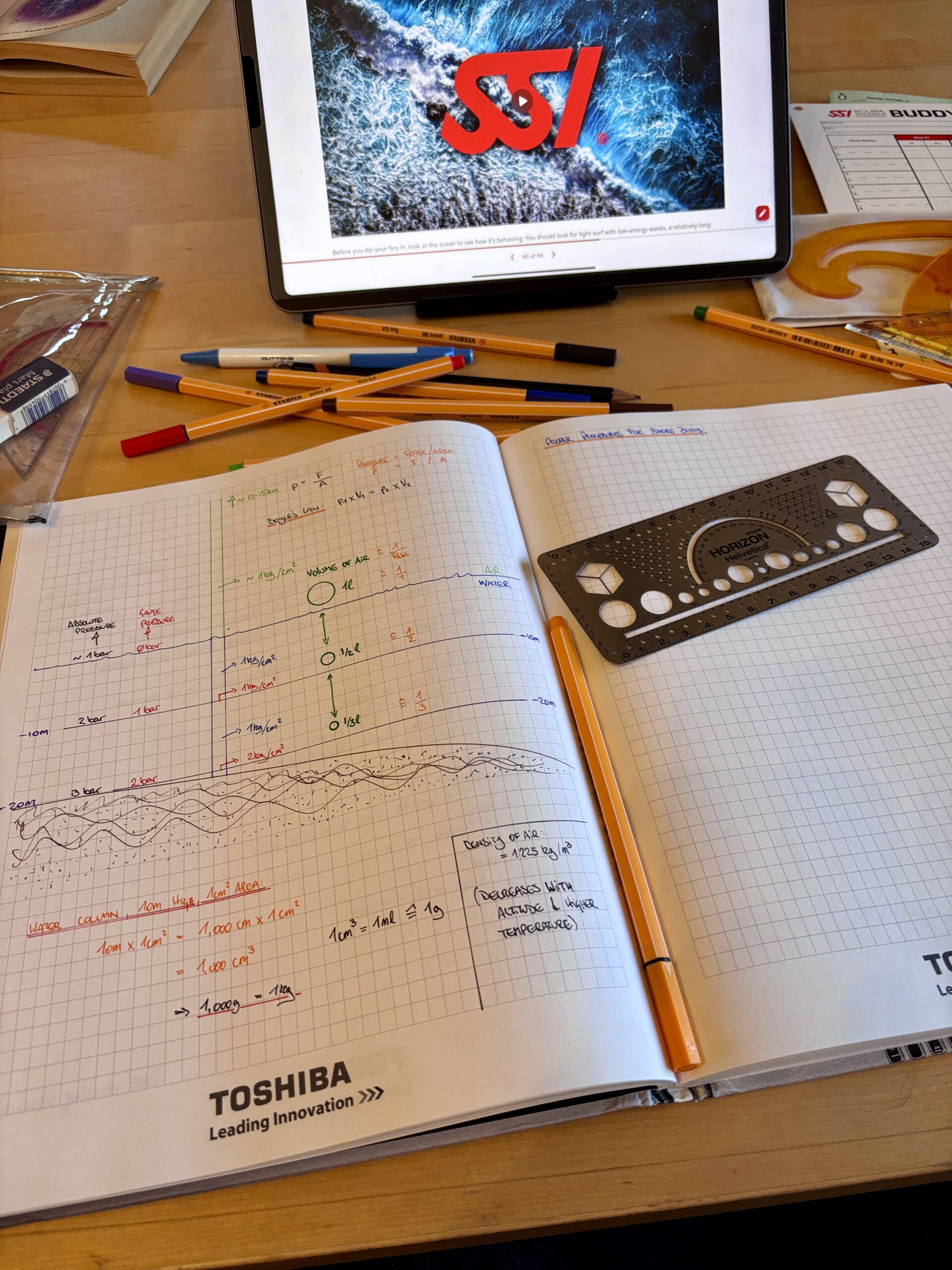
By August, I was ready to move forward again. I kicked off the Assistant Instructor (AI) course towards the end of August and it was a good professional-level programme. I did both the Divemaster and the AI course at the same centre, and compared to the Divemaster course, the AI felt like night and day. This time, there was clear structure, defined outcomes and requirements, consistent scheduling and focused feedback.
Each week had a rhythm: theory in the classroom, workshops in the water, and then evaluations. The emphasis was on clarity and control: slowing things down, refining demonstrations, and learning to anticipate where students might struggle before they even pick up a regulator.
The biggest takeaway? Teaching isn’t about showing how much you know. It’s about helping someone else understand what’s possible — and letting them get there at their own pace.
It was challenging, rewarding, and gave me a new level of respect for instructors who manage to make difficult skills look effortless.
Core Lessons
Across all these courses — from messy starts to polished finishes — a few things stand out:
- Training never stops. Each level doesn’t just add new skills — it deepens your understanding of the fundamentals.
- Mindset matters. Human factors like patience, communication, and situational awareness make or break a dive long before equipment or gas planning does.
- Teaching teaches you. You understand skills differently when you have to explain or demonstrate them.
- Community is everything. Mentors, peers, and dive buddies are what keep you grounded, inspired, and accountable, and shape your growth far more than any textbook.
Final Thoughts
Looking back over the past two years, I’ve learned as much about myself as I have about diving. The process hasn’t been smooth, but it’s been worth every reschedule, setback, and late-night gear check.
It was frustrating, of course. But again, there was something to take from it. Diving doesn’t always move on your timeline. Logistics, weather, people — they all play a part. What matters is maintaining your curiosity and professionalism even when things go sideways.
My long-term goal hasn’t changed: it’s not just to dive — it’s to teach and help others find the same clarity I feel underwater. If there’s one thing I’d tell new divers or aspiring pros, it’s this: the course isn’t the end point — it’s just the framework. What really counts is what you do with it afterward.
Looking ahead
The past year hasn’t gone to plan — but it’s gone exactly as it needed to. Every delay, detour, and dive has shaped how I think about instruction, risk, and the human side of diving.
I’m still learning (and probably always will be), but I’m more certain than ever that this is what I want to do: help divers become safer, more thoughtful, and more capable — both underwater and above it.
If you’ve ever felt frustrated or adrift during your own training — take heart. It’s part of the process. Each course, each challenge, and even each scheduling mishap teaches you something if you’re paying attention.
💬 I’d love to hear your experiences:
- What’s the most valuable lesson you’ve learned from dive training?
- Have you had a course that didn’t go to plan, or one that completely changed the way you dive?
I’d love to hear your experiences — drop a comment below or share your thoughts on Instagram @simonbdiving.

You May Also Like

My Powerboat Journey, part 1
2024-02-04
Training Log – Preparing for Instructor Pathway
2025-09-23