

Gear Spotlight – Long Hose Regulators
Most divers learn to dive with short hoses in open water, but there is an alternative. I’ve been using a long hose regulator setup for nearly 150 dives now, and I far prefer it to the traditional recreational setup. Here’s some reasons why I think everyone should consider long hose regulators for scuba diving…
What is a Long Hose Setup?
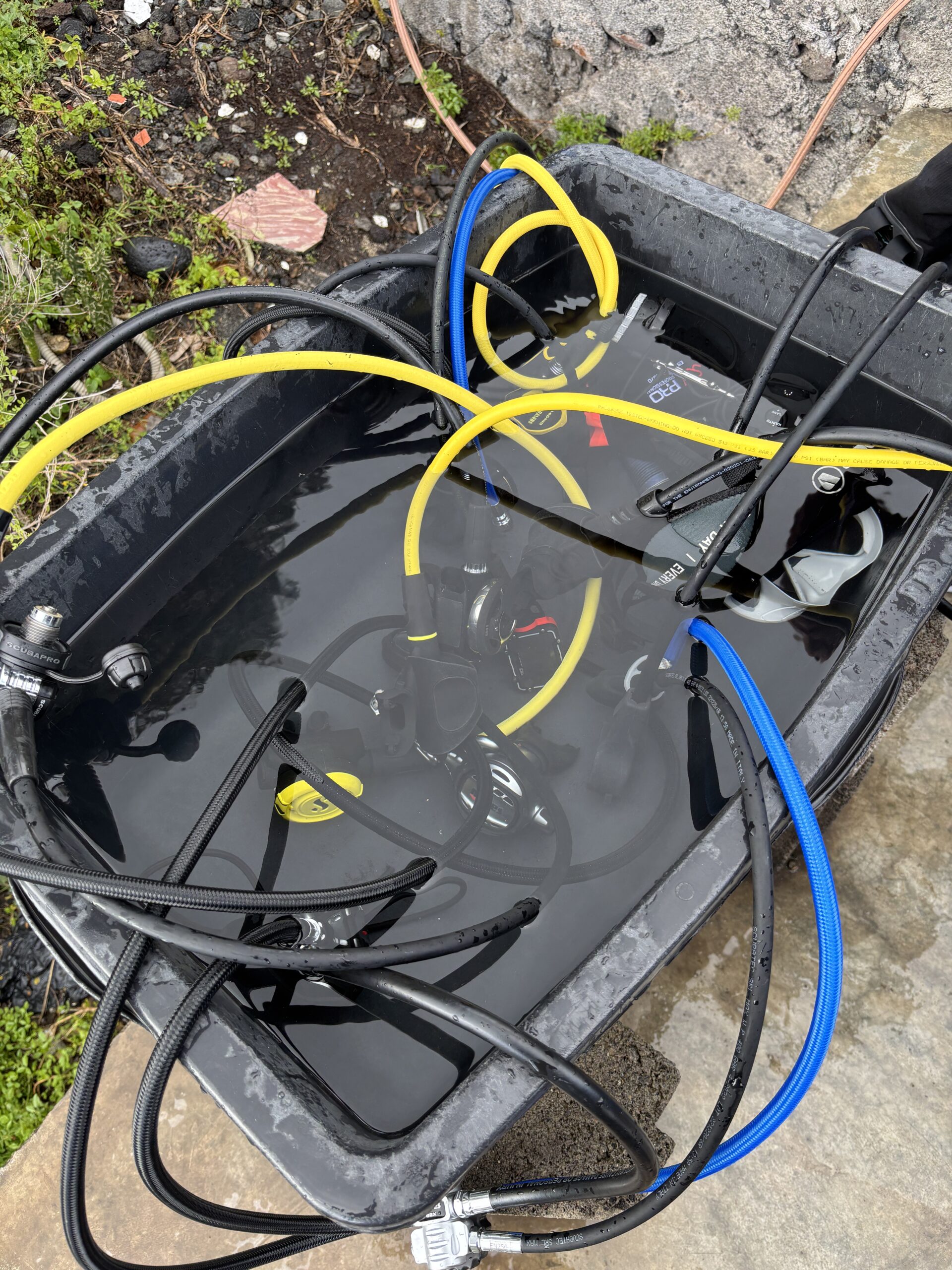
The standard recreational setup that most divers start out with consists of:
- A primary regulator on a 75cm (29.5″) hose
- A secondary regulator – usually called an “octopus” – on a 100cm (39″) hose
- A 60cm (24″) inflator hose
- An SPG (submersible pressure gauge) on a 90cm (35.5″) HP hose
The octopus regulator is usually bright yellow, and the hose is normally yellow too. The idea is simple: yellow is one of the last colours to disappear underwater. It’s bright enough that a buddy in an out-of-air situation can spot the secondary regulator easily.
A long hose setup, in comparison, consists of:
- A primary regulator on a 150-210cm (59-84″) hose
- A secondary regulator on a 55-60cm (22-24″) hose
- A 50-60cm (20-24″) inflator hose
- An SPG on a 60-75cm (24-29.5″) HP hose
In this case, the secondary regulator has a bungee cord attached to it, which is lovingly called “the necklace”; as the name would suggest, it is worn around the neck.
Advantages of a Long Hose
Historically, the long hose setup comes from cave diving. In an out-of-gas situation in a cave, it might not be possible to swim side by side, meaning the recipient of the air share has to swim ahead of the donating diver. This is where the 210cm length comes from – most regular people are shorter than 7 feet.
Even outside caves, in places like narrow passages, air donation with a long hose is far more comfortable. With the standard recreational hose lengths, the only way to share air is face-to-face, holding tight to each other’s BCDs (some agencies teach to keep the octopus on the left side to enable easier air donation without a lot of faffery – I’m on the fence here).
With a long hose (150–210cm), both divers are free to move. You can face each other, swim side by side, or even let the out-of-air diver swim ahead. To donate the long hose to an out-of-gas diver, the donor simply takes hold of the hose next to the second stage, and with a “duck and punch” movement hands it off to the recipient, before then switching to the secondary regulator on the necklace.
Less Clutter
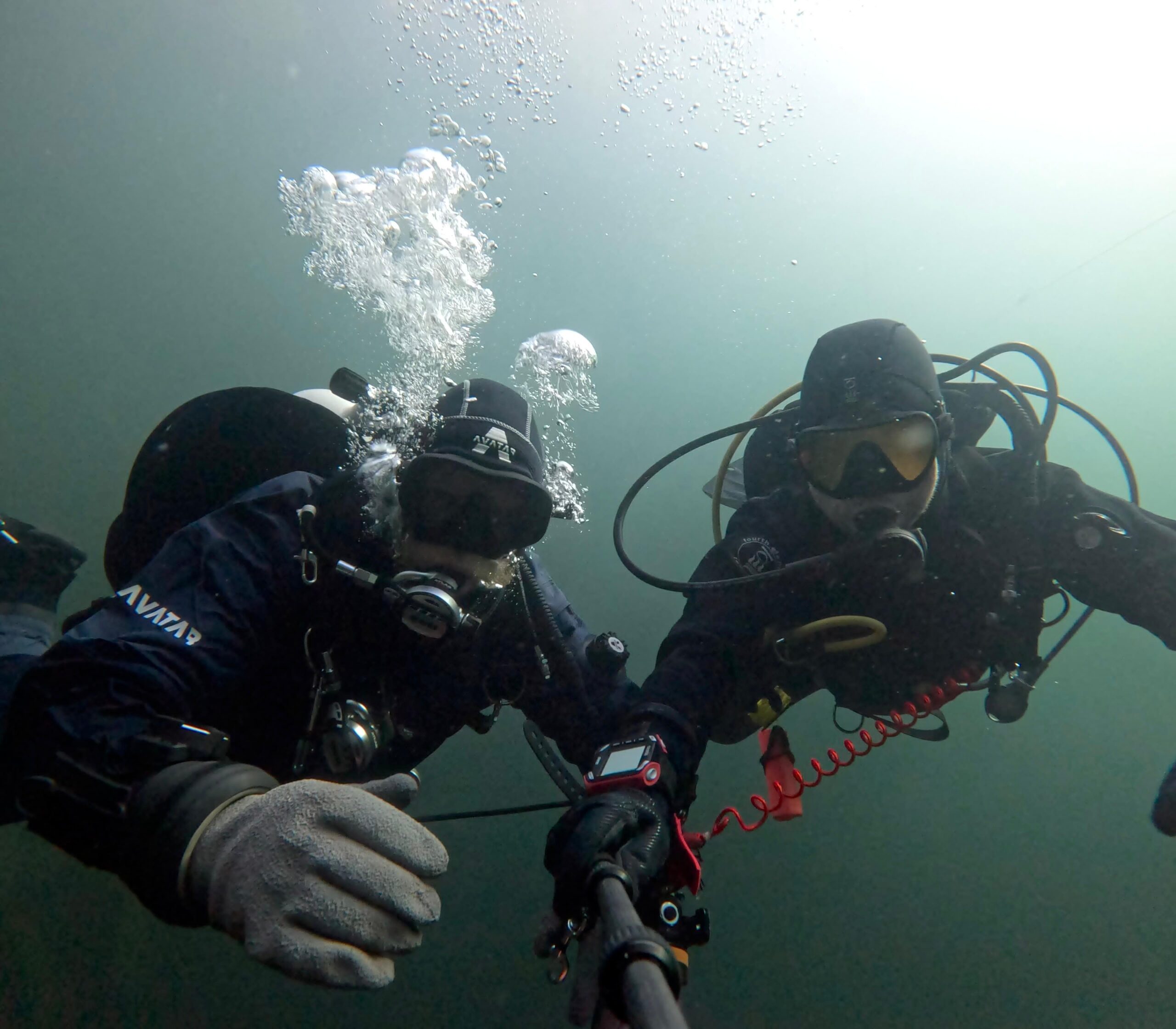
In general, we don’t really want to look like Christmas trees underwater – while I have nothing against Christmas trees in general, any dangling equipment is an entanglement hazard. Gear which isn’t tidied away can easily get caught on protruding rocks, corals, bits of the wreck you’re visiting – or if your buddy is having a bad day, it can get tangled around them too.
On a long hose setup, the primary regulator hose has a boltsnap tied to the hose, approximately 1 handwidth from the second stage. The SPG hose has a boltsnap tied off approximately 5cm (2″) back from the SPG itself. As mentioned above, the secondary regulator has a bungee necklace, and is worn around the neck.
The long hose comes down the right hand side of the cylinder(s), is tucked under a torch canister on the diver’s right hip, and then led up and over the left shoulder before wrapping around behind the neck and hanging over the right shoulder. When not in use, it is clipped off to the right shoulder D-ring.
While this sounds a bit complicated, in practice it means that the hose for the secondary regulator is just about long enough to reach from the first stage to the diver’s mouth – no hoses flapping around in the wind. The long hose is wrapped around the diver’s body, and when not in use, clipped off so it doesn’t dangle around. Finally, the SPG is very close to the body and is clipped in to a D-ring on the left hip. The length of the hose means it stays close, yet is still long enough to unclip and bring into your field of vision to read it.
Another big advantage for me: if you were to drop your primary regulator, it’s not going far. It will be hanging around your right shoulder, which makes regulator recovery so much easier…
Versatility
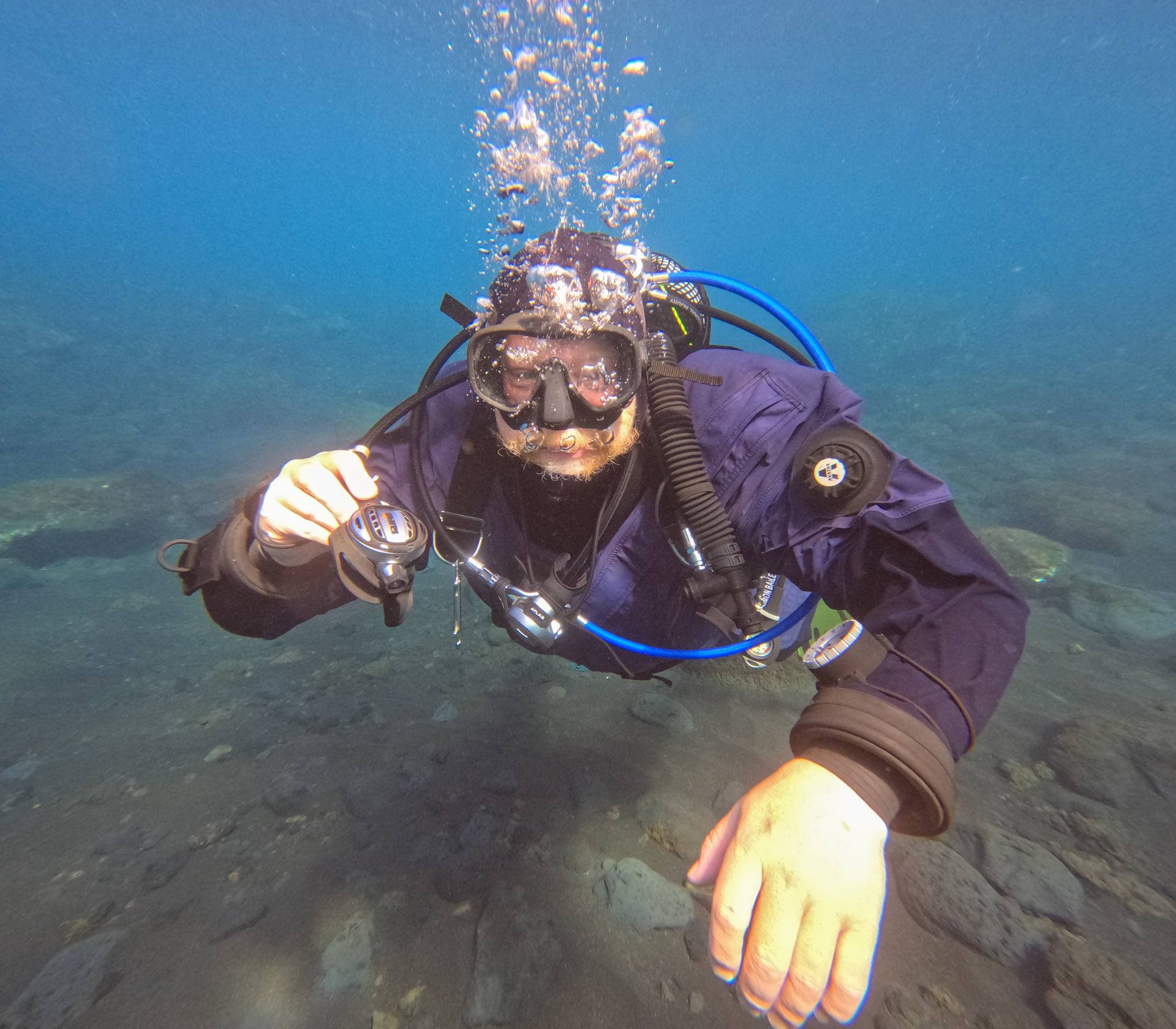
Using a long hose as a recreational diver isn’t a bad idea. One big advantage is that if you move into technical diving later (like wreck penetration), you’re already familiar with the setup.
As a dive professional, it gives me the peace of mind that if one of my guests were to have an out-of-gas situation, then regardless of which agency they trained with, I can donate my long hose to that diver and we can finish the dive in a more comfortable position – whether that’s an open-water ascent or swimming to the exit. And, as an added benefit, that diver will be able to relax more in a stressful situation, as we’re not holding on to each other for dear life with our masks about 6 inches apart.
Finally, the main advantage for me is that it doesn’t matter if I’m using a BCD, a wing with a single cylinder or a heavy twinset: the regulator setup is always identical.
Disadvantages of a Long Hose
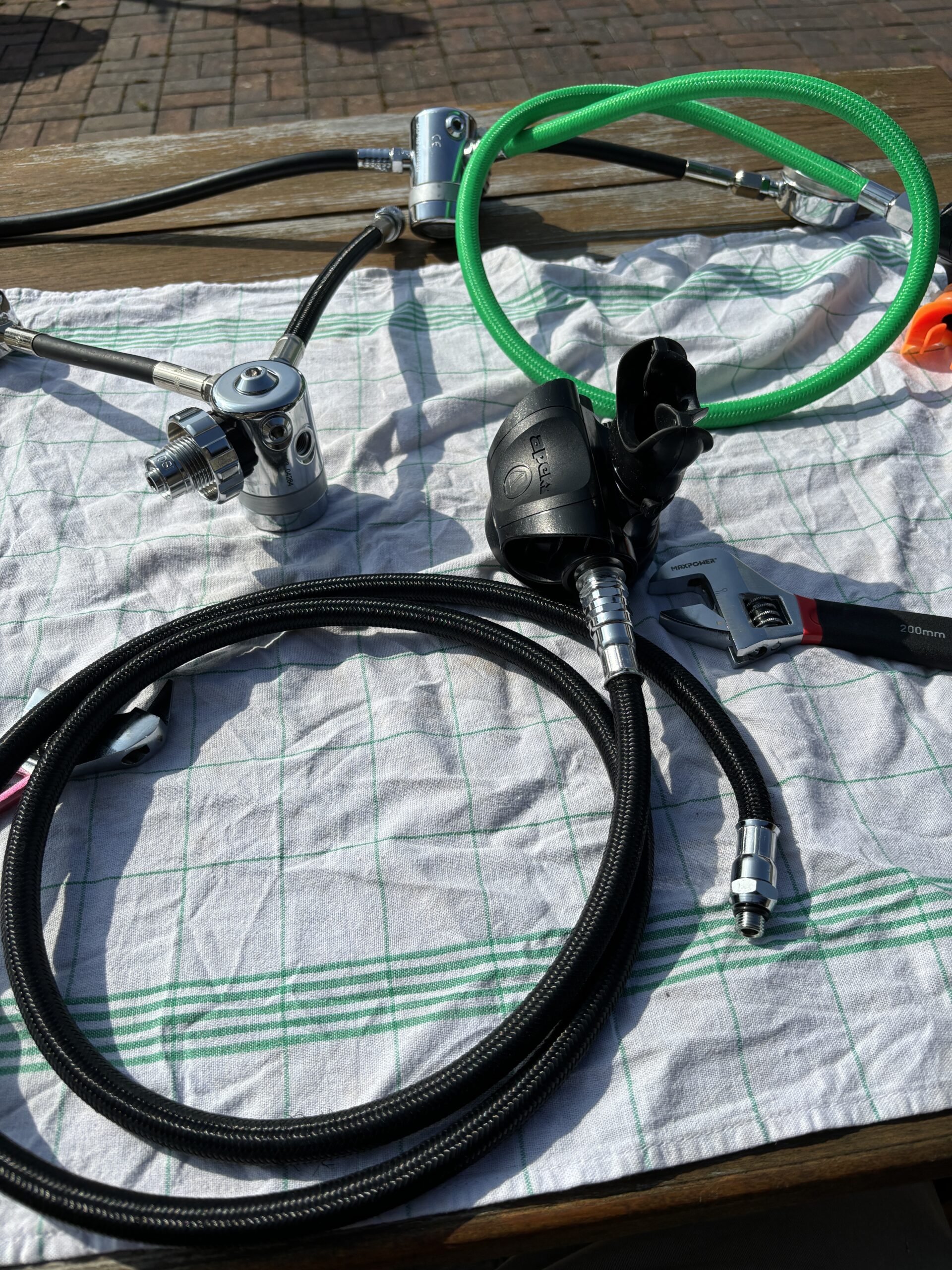
Using a long hose setup is not as straightforward as screwing on a first stage with 2 short hoses with 2 second stages attached. The hose routing is important, and something that needs to be practiced and verified before every dive. While there is general consensus on the length of the long hose, it does require some tweaking to find the perfect hose lengths for your setup for your secondary and (more on that below).
Due to this extra faff, it can seem overkill for casual divers who just want to look at the pretty fish. Also, some training or mentorship is definitely required when experimenting with a long hose setup for the first time – I’ve seen a number of divers who had their long hose regulator on a necklace, for instance…
My Setup
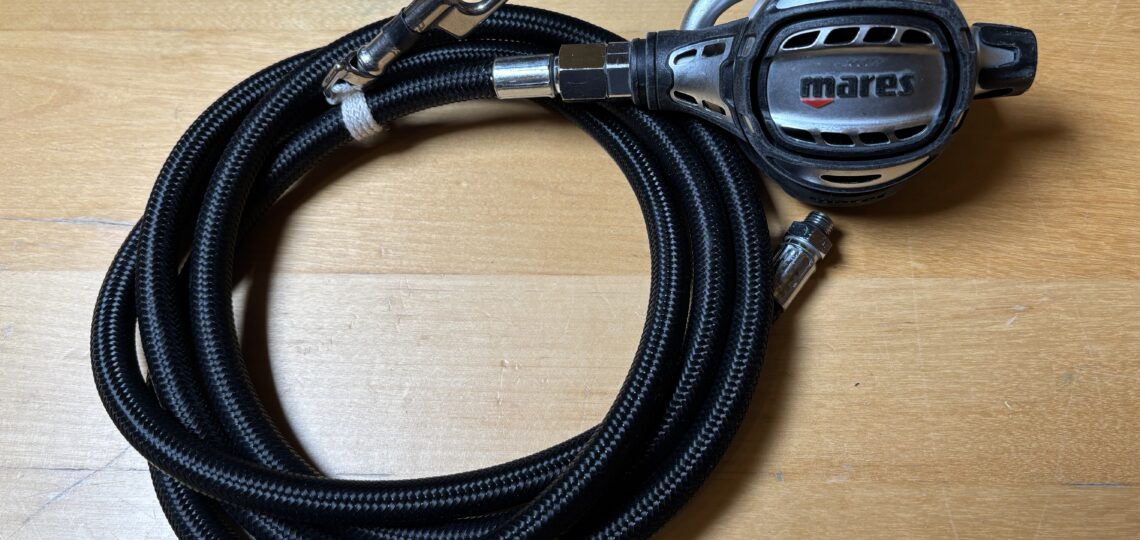
My main regulator is a Mares Atlas Adj, and the secondary is a Mares Atlas. When I do need to swap back to a recreational setup, I have a Mares Dual octopus. I have 2 Mares 62x first stages with the TBP (Twin Balanced Piston, a doohickey that Mares add to the first stage to make it better suited for cold water). I run these first and second stages in a number of different combinations, depending on what I’m going to be doing. The 62x has 4 LP ports and 2 HP ports, I will explain (with photos), how I set them up below.
Recreational
If I need my regulators in a recreational setup (i.e. for teaching), I build them up as follows:
- 1 62x TBP first stage
- Atlas Adj on a 75cm hose on the front right LP port
- Dual octopus on a 100cm hose on the rear right LP port
- 60cm BCD/Wing Inflator hose on front left LP port
- 85cm drysuit inflator hose on rear left LP port
- Mares SPG in a boot on a 90cm hose on the left HP port
- Garmin Descent T2 transceiver on the right HP port
I have a boltsnap tied off on the SPG hose so I can use it on a wing or on a BCD.
Single Tank Long Hose
- 1 62x TBP 1st stage
- Atlas Adj 2nd stage with 210cm hose on rear right LP port
- Atlas 2nd stage with 55cm hose on front right LP port
- 40cm Wing inflator hose on front left LP port
- 85cm Drysuit inflator hose on rear left LP port
- Halcyon SPG on a 75cm HP hose on left HP port
- Garmin Descent T2 transceiver on a 15cm HP hose on the right HP port
Twinset Long Hose
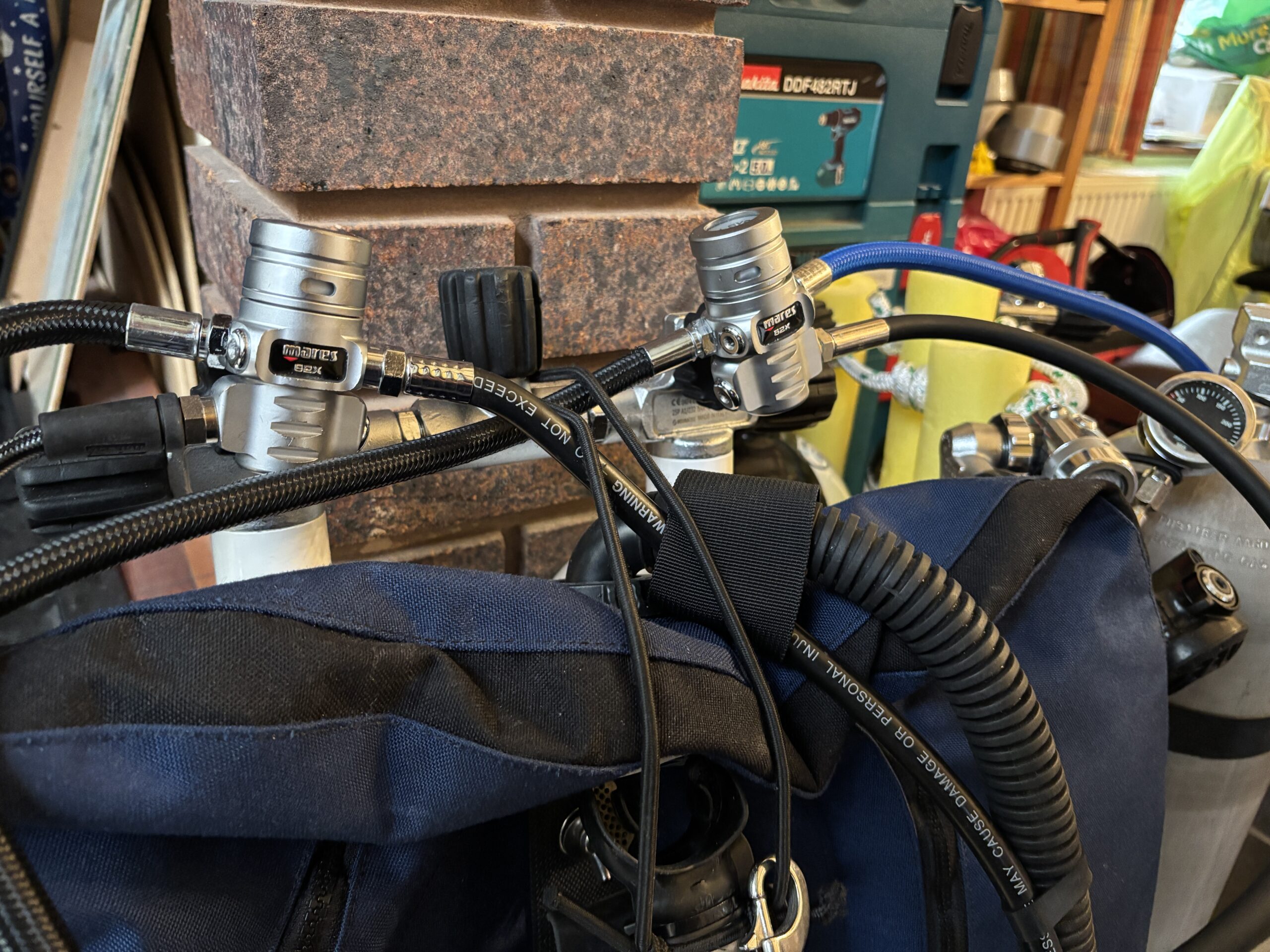
On a twinset, the hose lengths change, and there are now two 1st stages, one for the right post and one for the left.
Right Post
- 1 62x TBP 1st stage
- Atlas Adj 2nd stage with 210cm hose on rear right LP port
- 40cm Wing inflator hose on front left LP port
- Garmin Descent T2 transceiver on a 15cm HP hose on the right HP port
Left Post
- 1 62x TBP 1st stage
- Atlas 2nd stage with 60cm hose on rear right LP port
- 85cm drysuit inflator hose on front left LP port
- Halcyon SPG with 60cm hose on right HP port
If you read carefully, you can see that I have different hose lengths on the single tank and twinset setups. This is mainly for streamlining: on a twinset, the two 1st stages are offset from the centre of the tank by approximately 9cm. This has the effect that the secondary regulator hose needs to be slightly longer and the SPG hose slightly shorter than when using a single first stage.
Some Tips for Getting Started
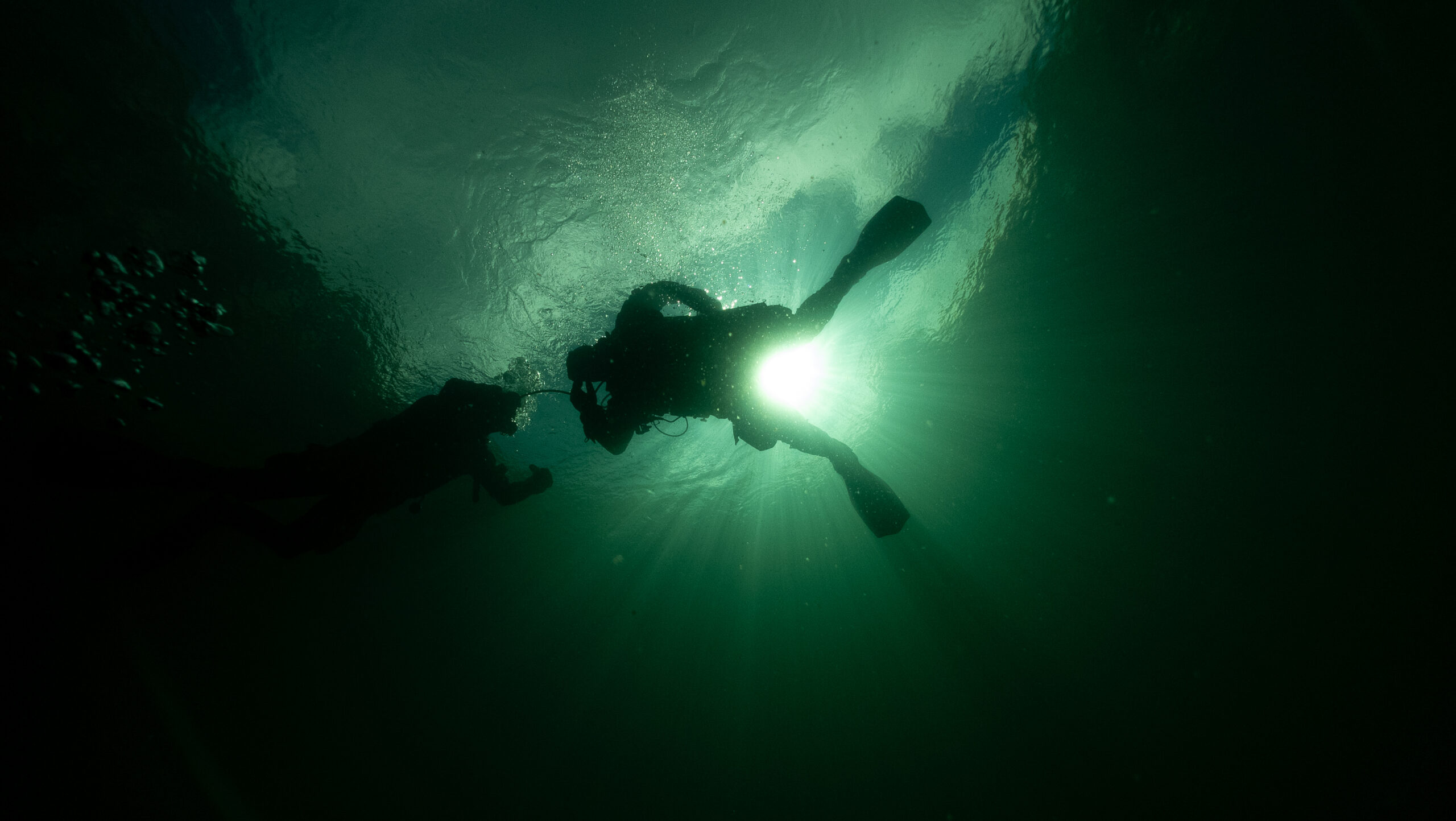
If you want to try using a long hose, the best thing you can do is ask one of your local dive buddies who uses a long hose to walk you through how they’ve configured their setup. Alternatively, any technically-oriented dive professional will be happy to give you some instruction.
If you are not comfortable with using tools on your first and second stages, ask your local dive shop to help you with rebuilding your regulator configuration.
Once you have decided to use a long hose setup, then spend some time getting to know it: practice, practice, practice. Here are some basic drills that can be done on any dive:
- Removing and replacing the primary regulator (we should all be comfortable doing this with a “normal” regulator too…).
- Swapping to the secondary regulator:
- Take the primary regulator out (don’t forget to blow bubbles).
- Put the secondary regulator in your mouth and purge it.
- Finally, clip the primary regulator off to the shoulder D-ring.
- Swapping back to the primary regulator:
- Unclip the primary regulator and hold it pointing downward.
- Take (or spit) the secondary regulator out.
- Put the primary regulator in your mouth and purge it.
If you have a willing buddy, you can also practice handing off your long hose to your buddy. This skill is best learnt under supervision, however.
One final important thing to remember: deploying the long hose is part of the buddy/safety check before the dive! This will ensure the full length of the long hose is not trapped: unclip the primary regulator from your shoulder D-ring, unwrap it from around your body and trace the length of the hose all the way back to the first stage (you can also get your buddy to visually check this), then stow it all back again. This skill is also something that a suitable mentor or instructor will be able to show you (and by doing it before every dive, you’ll automatically become comfortable deploying and stowing the long hose).
Closing Thoughts
One of the main reasons I use a long hose setup is because it is so versatile, but also because it doesn’t matter which type of diving I’m doing: my regulators, inflators and SPG are always going to be in the same place and the movements to retrieve or stow any of them are identical. Continuity and familiarity means there’s less brain load underwater, allowing me to concentrate more on the dive at hand.
Because I only have two first stages and two second stages, switching setups does mean I have to think and plan ahead and spend some time rebuilding my regulators in advance. Swapping between single tank and twinset long hose isn’t too onerous, but I am considering getting another first and second stage that I can dedicate purely to a recreational setup.
I’ll be covering more gear setups and training insights as I progress on the instructor pathway. Is there a piece of kit you’d like me to break down next? Let me know in the comments below or over on any of the socials!


You May Also Like
Training Log – Preparing for Instructor Pathway
2025-09-23
Wonders in the Deep – Mensun Bound & Mark Frary
2025-08-13