


Deco for Divers – Mark Powell
Mark Powell’s Deco for Divers has long been considered the bible of accessible decompression theory. Indeed, when I asked for recommendations for books to read and review, this one was suggested by a number of different people. It had been recommended to me before when I first started showing an interest in technical diving, so it’s actually been in my library now for a couple of years. It has been hugely influential in the diving world, but influence does not necessarily guarantee accuracy or quality.
The following review is for the second edition, published in 2014 and reprinted in 2016.
First Impressions
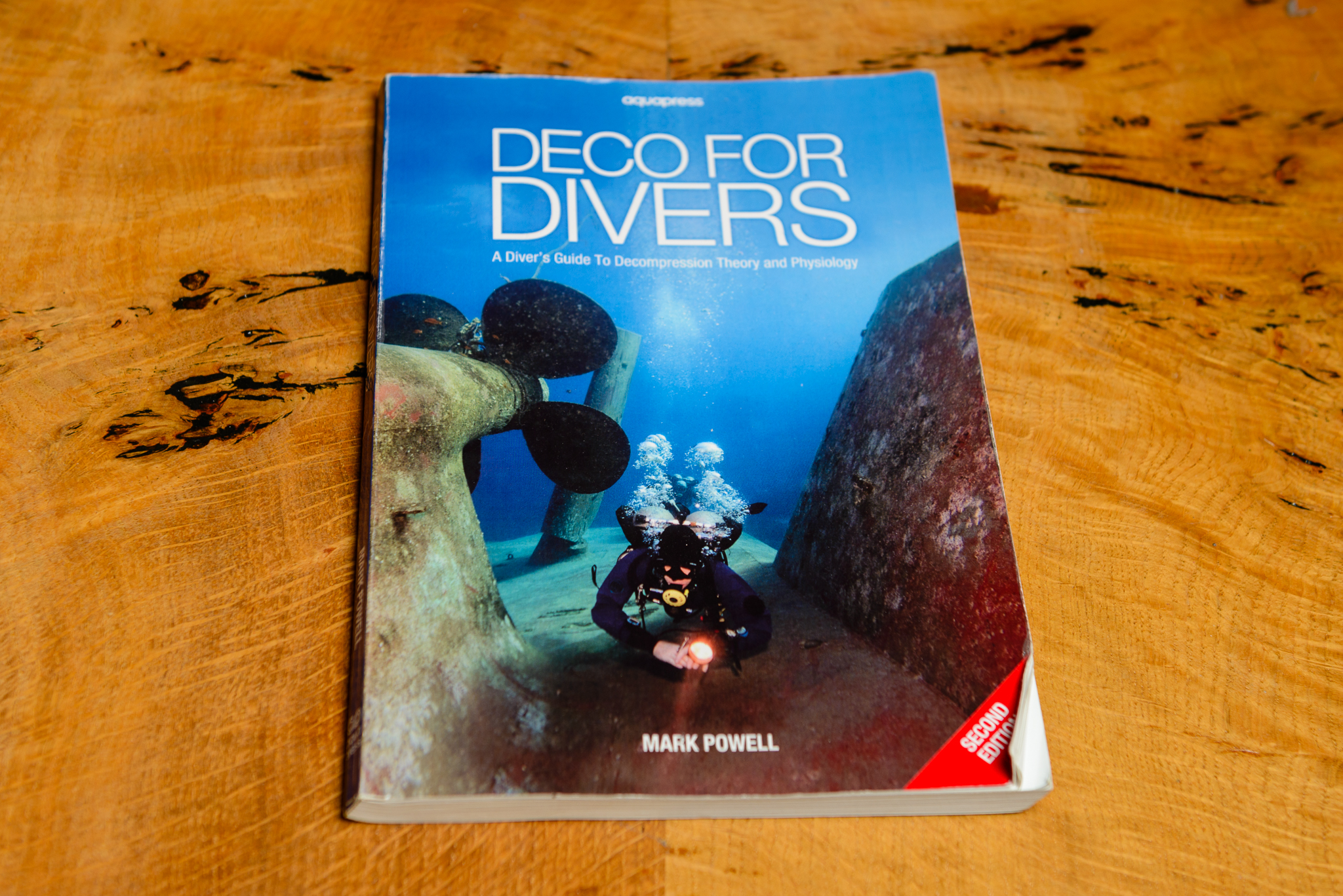
The book is in booklet format (17x24cm, 6.7×9.4in) and glue bound with fairly thin card stock as the cover. It has a solid heft to it, yet the soft cover makes it easy to flip through the pages. The block is perfectly cut, the inner pages are thinner than expected. When I first opened the book, there was still a noticeable smell from the gluing and binding process, this does dissipate with time.
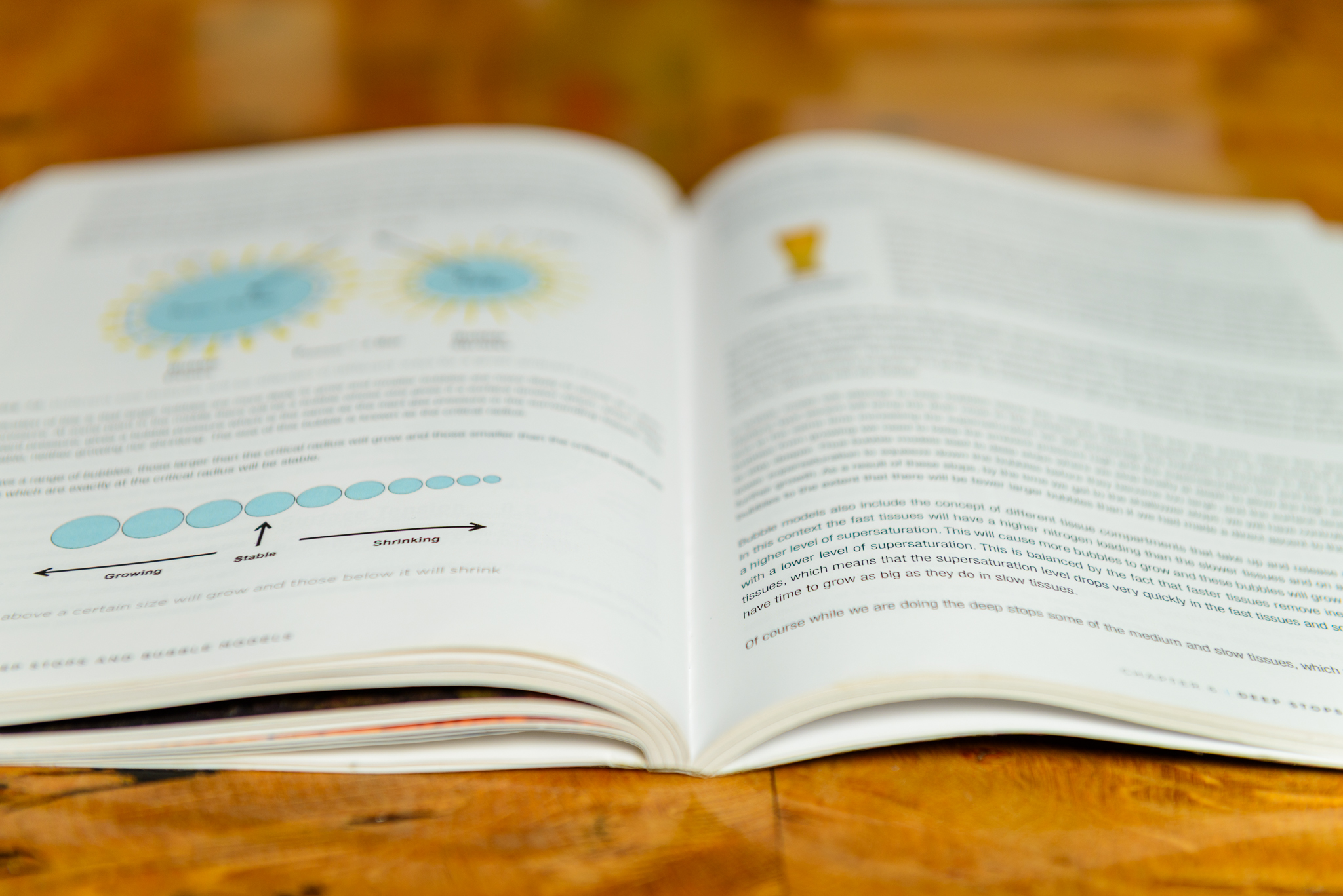
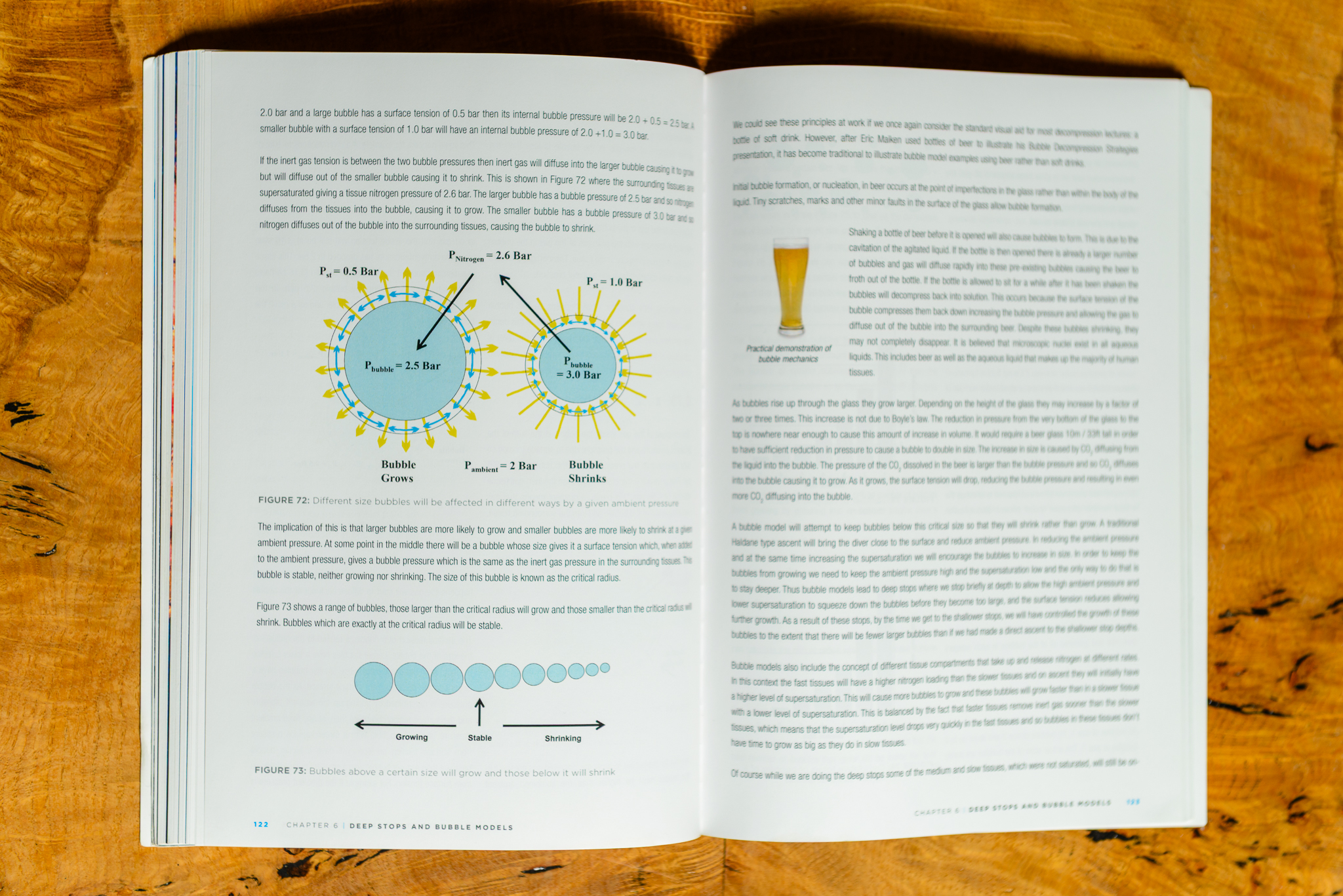
The paper stock is semi-glossy, which works very well with the illustrations and text. The binding is not a lay-flat binding, so when reading on a flat surface, the pages are very curved. After reading this book a few times, the binding itself has started to crack slightly. The colophon contains the usual information about the publisher, but does not include any information on who provided the layout or printing.
The cover itself has an attractive photo on the front and a number of quotes on the back cover. During the first read, the UV varnish film on the cover started peeling from the edges of the cover.

Mark Powell

There is no information about Mark Powell in the book, nor on the publisher’s website. Here is the brief description from the Amazon listing:
Content
Powell starts the book with an introductory chapter detailing his motivation for writing the book, and outlining the content:
This is followed by chapter covering the historical development of decompression research and theory. The next chapter is entitled “Decompression Illness”, which covers the physiological processes that occur in the body when diving and how that can cause decompression injuries. Two brief chapters follow, detailing the mechanisms of saturation diving and the use (and utility!) of Nitrox.
The second half of the book starts with a detailed look at “Deep Stops and Bubble Models”, followed by a closer look at the effects of adding gases to the breathing mix. The final chapters dive into “Other Decompression Models” and then the mathematical models underlying the decompression models; this final chapter is subtitled with the statement “Only for those with an interest in the mathematics, anyone else should feel free to skip this chapter.”
Finally, Powell includes a detailed bibliography (more on that below) and an index to allow the reader to quickly jump to specific topics.
Reading Impressions
Powell covers a lot of ground in this book. His explanations are generally at a high enough level that they are easy to grasp and very useful as a starting point for more research into diving theory. His goal is to make the cold, hard theory accessible for non-scientists, and he does so admirably. The historical overview is brief, the physiological chapter is fairly extensive and the chapters on decompression models themselves are interesting reading.
However, the goal to make things easy to grasp leads to a number of inconsistencies – for instance, in one part of the physiology chapter the pressure units switch from bar to mmHg, without any explanation what mmHg is or how it relates to bar. From a medical and physiological standpoint, tissue pressures are usually given in mmHg, but by skipping the explanation, it can lead to some confusion. There are numerous spelling mistakes, or even incorrect use of words (e.g. effect vs. affect) that detract from the reading experience.
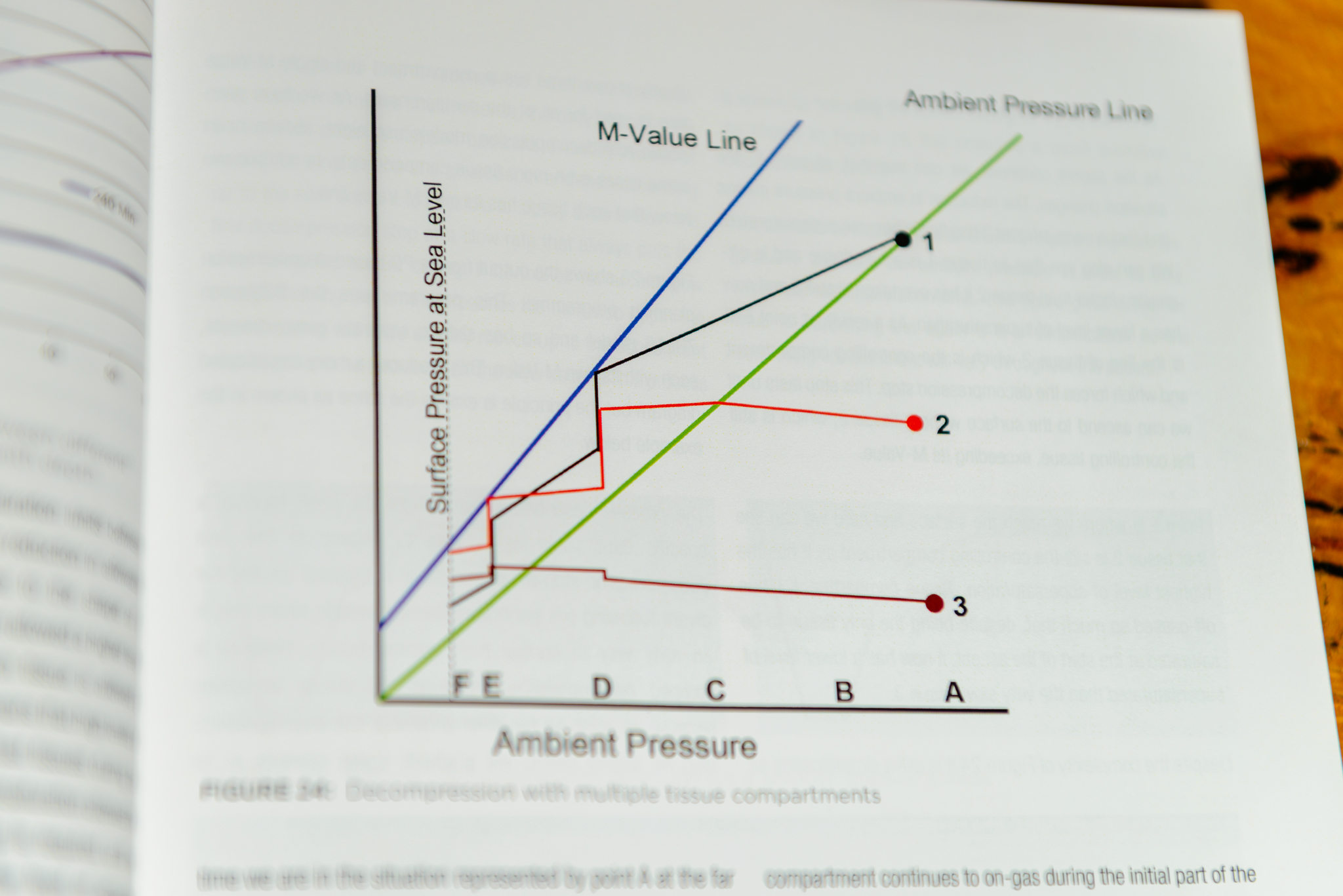
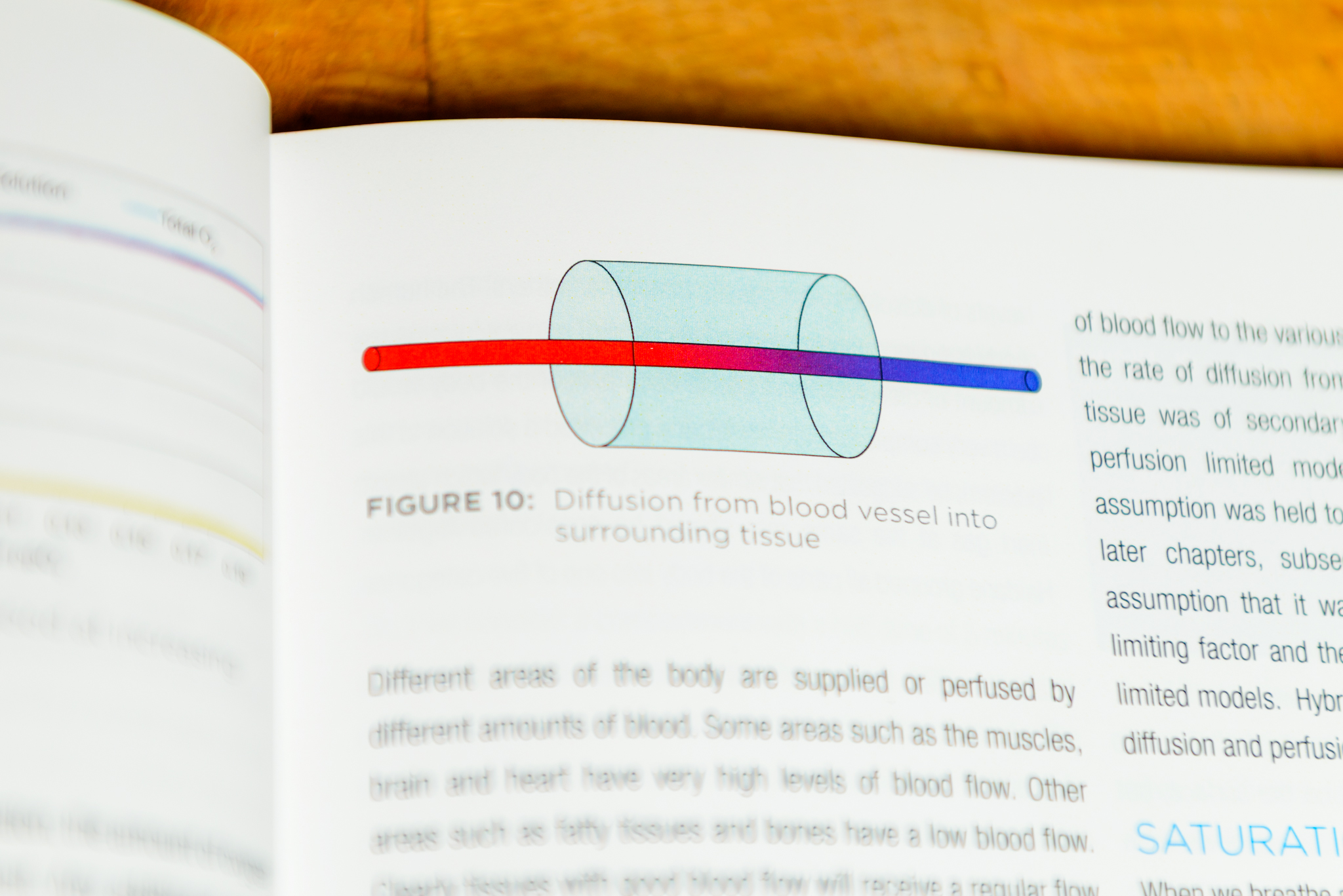
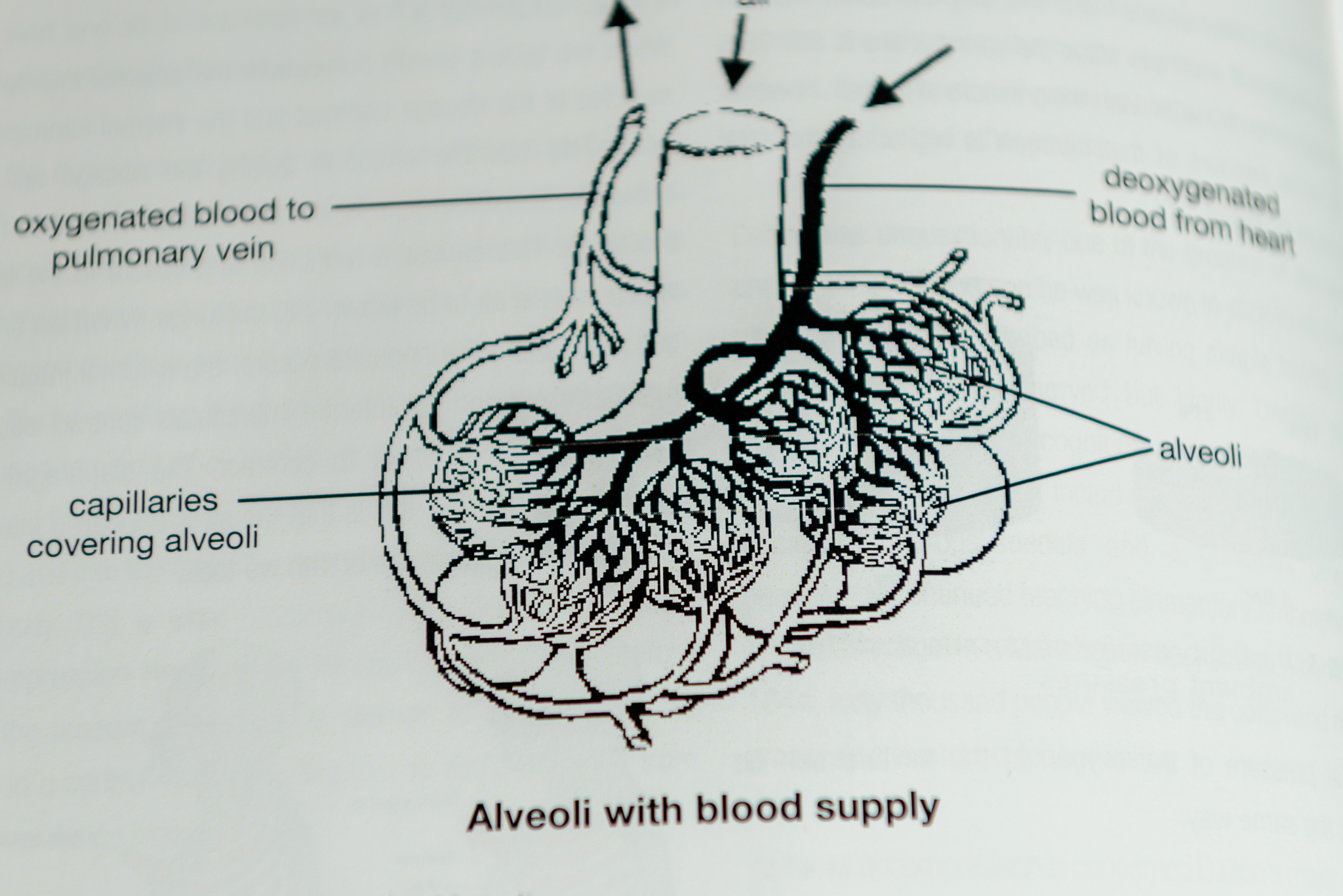
In addition, the quality and information content of many of the diagrams – especially in the first half of the book – is very bad. There are no references to the sources of the images, many of which are obviously (bad quality) scans from physiology text books – as a photographer (and ex scientist), this is disappointing. However, in the acknowledgments, the author does mention that many of the photographs were provided by Gareth Lock.
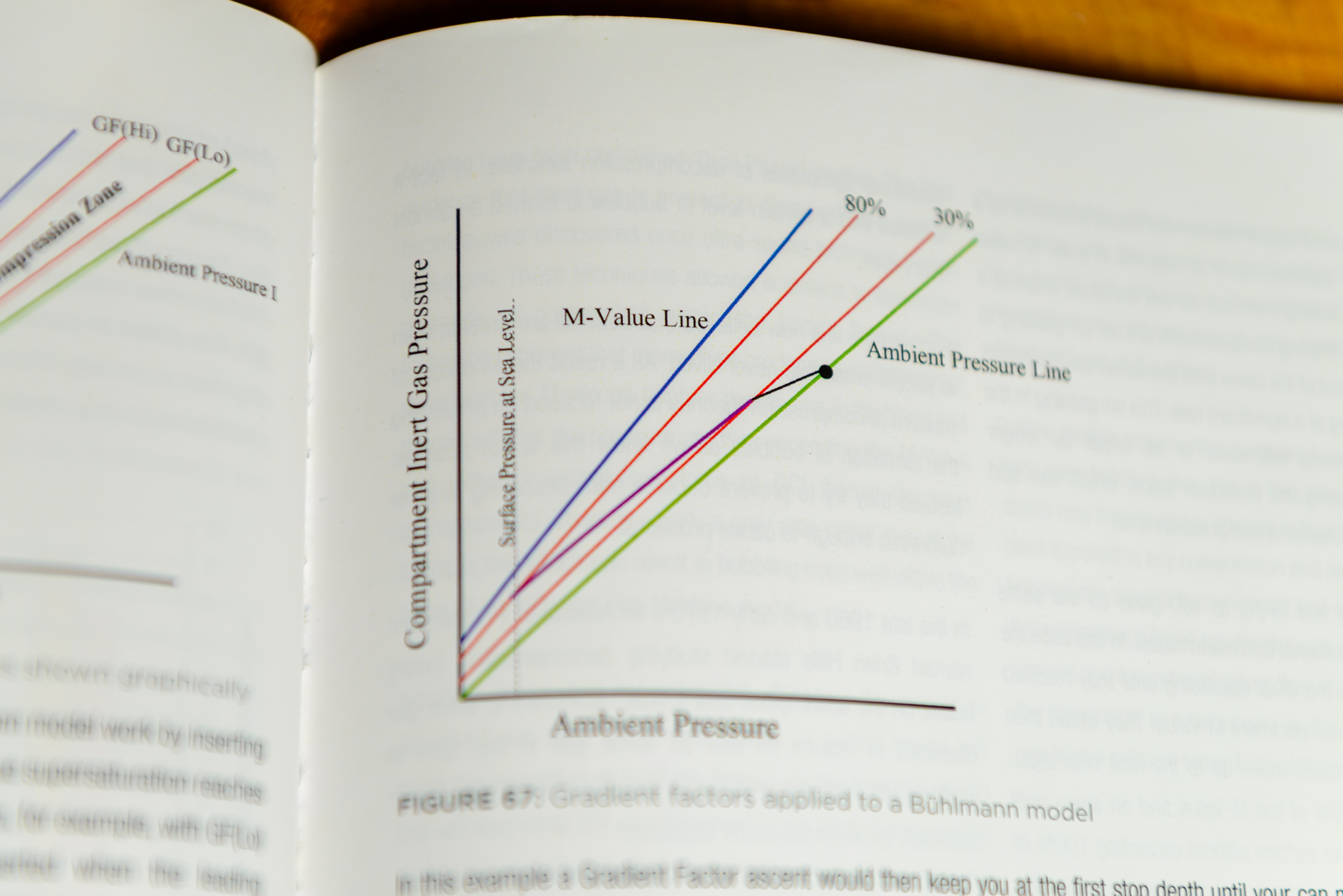
All in all, I found the content of the book interesting, and it answered most of my initial questions on decompression, such as what gradient factors are and why they are useful. The review of “alternative” decompression models could have been expanded, as I found that part of the book most interesting.
I really wanted to like this book, but found myself having a hard time enjoying it in the early chapters. The quality of the illustrations and the layout, in combination with the inconsistencies and spelling errors in the text detracted from the reading experience. Powell’s decision to not reference any of the bibliography directly from the text makes the reading flow easier, but did lead me to question the credibility of some of the blanket statements.
Takeaways & Who Should Read It
Having said that, the book is really good as an entry-level introduction to decompression theory, but I would not consider it a definitive source. Powell covers a broad range of content, however some of it feels slightly outdated (I thought we’d moved away from deep stops as being a Good Thing™?). For divers without a scientific background, it’s a useful starting point.
For divers who want to know more about decompression theory, consulting agency training materials or articles from technical publications, such as InDEPTH Magazine, is currently the best next step. Richard Devanney has a good list of further reading on his website, The Technical Diver, which can be found here.
Rating
The content is ambitious, and I would recommend it to any divers interested in the basics of decompression theory. It is accessible, some of the explanations are very good indeed, but the layout and quality of illustrations let it down. I’m giving it a solid 3.5 stars.
Quality
Layout
Content
Total
Colophon
Title: Deco for Divers
Authors: Mark Powell
Publisher: AquaPress Ltd
Publication date: 15 Dec. 2014
Language: English
Print length: 194 pages
Paperback ISBN: 978-1-905492-29-9
RRP: £34.99
Purchased from Amazon, 10/6/2024 for £25.65
Links
Get your copy from Amazon UK (I may earn a small commission if you purchase through these links):
“Have you read Deco for Divers? Did you find it clear and useful, or did you notice the same issues? I’d be interested to hear how it shaped your approach to decompression.”


You May Also Like

Training Log – Preparing for Instructor Pathway
2025-09-23
My Powerboat Journey, part 1
2024-02-04
One Comment
Pingback: